
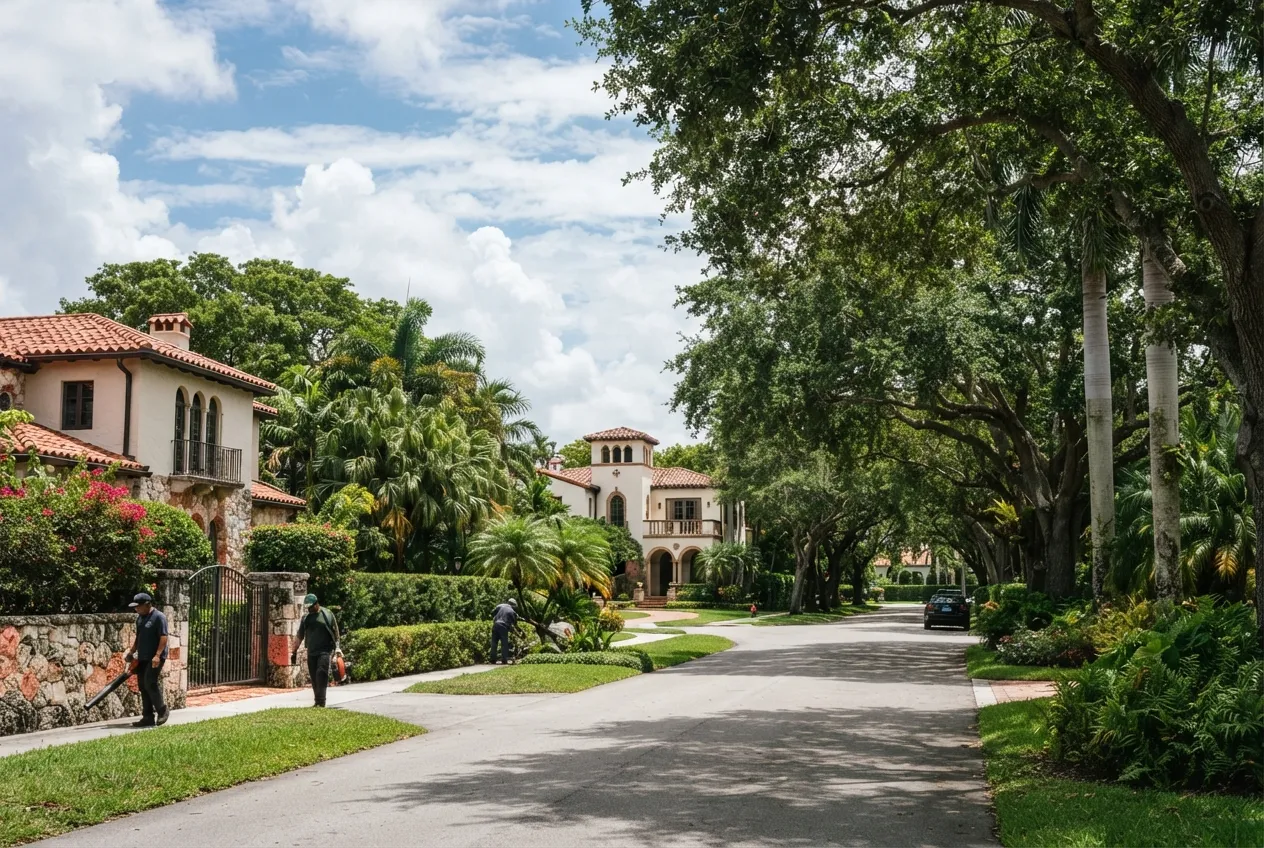
The short answer
A properly sized heat pump handles Coral Gables' long cooling season and its few cool days in one system. We check your home's load, ductwork, and outdoor unit placement before recommending equipment. FPL may offer rebates on qualifying high-efficiency models, but the federal 25C tax credit no longer applies to new installations.
A heat pump is often the most practical way to cool and heat a Coral Gables home. It works like a standard central air conditioner for most of the year, then reverses on the occasional cool morning to provide heat. AirVantage Heating & Cooling installs heat pumps for homeowners across Coral Gables, including the 33134 and 33146 ZIP codes, about 6 miles south of our Miami base. This page explains what installation involves, how we size and place equipment for local conditions, and what to know about rebates and tax credits before you buy.
Why Heat Pumps Make Sense for Coral Gables Homes
The Miami area follows the same weather pattern as nearby Miami Beach. May through October is the wet season, with frequent afternoon thunderstorms. November through April is sunnier and less humid. Air conditioning runs for most of the year, and heating is needed only now and then.
That pattern suits a heat pump. You get a central cooling system built to run for long stretches, plus heat on demand without a separate furnace or electric strip system. If your current system is an older air conditioner with backup heat strips, switching to a heat pump can mean more efficient heating on the cool days you do get.
How We Size and Plan Your Installation
Sizing matters more than brand. An oversized unit cools the house quickly but shuts off before it removes enough moisture, which can leave rooms feeling clammy. That is a real problem in a humid climate. An undersized unit runs nonstop and struggles on the hottest afternoons.
Before we recommend equipment, we look at your home as it actually is, not just its square footage.
- Insulation, window exposure, and how much afternoon sun the house gets
- The condition, size, and layout of existing ductwork
- The location and access of the air handler, whether in a closet, garage, or attic
- Electrical capacity for the new system
- Drainage for condensate, which matters in a house that runs cooling almost all year
Placing the Outdoor Unit for Storms and Heavy Rain
The Atlantic hurricane season runs from June 1 to November 30, and it overlaps most of the wet season. Where the outdoor unit sits affects how well it holds up.
We set the condenser on a stable, level pad. Where flooding or standing water is a concern, we raise it. We leave clearance around the coil for airflow and service access, and we secure the unit so it is less likely to shift in high winds. We also route the refrigerant line set and electrical connections with weather exposure in mind. If your yard has drainage problems near the current unit, we'll point that out and talk through alternate locations.
What Installation Day Looks Like
Most replacements follow a predictable sequence. We protect floors and work areas, then recover refrigerant from the old system and remove the existing equipment. We set the new air handler and outdoor unit and connect or replace the line set as needed. Next we pressure-test and evacuate the system before charging it.
Before we leave, we run the system in both cooling and heating modes, check airflow and temperatures, and confirm the condensate drain is working. We'll also show you how to use the thermostat and how often to change the filter, which matters in a home where the system runs nearly year-round.
Rebates and Tax Credits: What Applies Now
Florida Power & Light runs a Residential HVAC program with rebates on qualifying high-efficiency central air conditioners and heat pumps. These rebates go through participating contractors at the time of installation. Program terms can change, so we confirm the current details before including any rebate in a quote.
Some homeowners still ask about the federal Energy Efficient Home Improvement Credit, known as 25C. That credit covered qualifying heat pumps placed in service before December 31, 2025. It is not available for new installations after that date, so we don't factor it into current projects.
Serving Coral Gables and Nearby Communities
Along with Coral Gables, we install heat pumps in South Miami, West Miami, Miami Springs, Sweetwater, and Doral, all in Miami-Dade County. If you're comparing options for a replacement, we're happy to walk through equipment choices and answer your questions before you decide.
More services in Coral Gables
- AC Repair in Coral Gables
- Heating Repair in Coral Gables
- AC Installation in Coral Gables
- Furnace Repair in Coral Gables