
The short answer
Most Miami homes heat with electric heat strips or a heat pump rather than a gas furnace, and we install all three. If your heat smells burnt, trips the breaker, or blows lukewarm air, we'll inspect the full system and explain whether a repair or a replacement makes more sense.
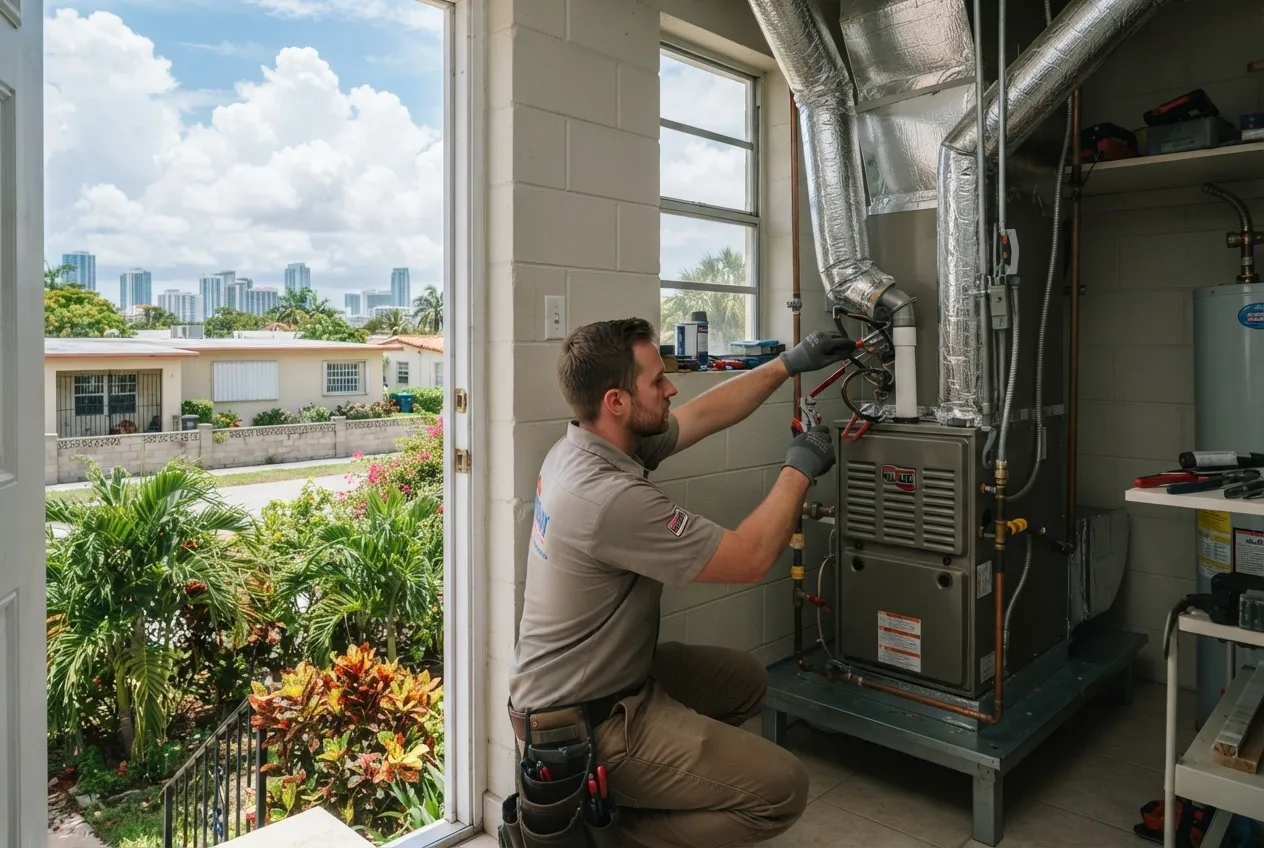
In Miami, most homes don't have a traditional gas furnace. Heat usually comes from a heat pump or from electric heat strips inside the air handler, and it only gets used on the cool mornings and evenings between November and April. That doesn't make it unimportant. When a cold front comes through, a heater that smells like burning dust, trips the breaker, or blows lukewarm air is a real problem. AirVantage Heating & Cooling installs and replaces gas furnaces, electric heat strip kits, and heat pump systems for homeowners in Miami and nearby cities. This page explains how to tell when it's time, what we look at, your repair and replacement options, and what to expect from a visit.
Signs You Need a New Furnace or Heating System
Because heating runs so little here, problems often go unnoticed until the first cool night. These are the signs we hear about most:
Humidity plays a role too. Miami's wet season runs from May through October, and the moisture that builds up in air handlers, closets, and attics during those months wears on electrical connections and metal parts, even in equipment that rarely makes heat.
- A burning smell that lingers well past the first few minutes of the season, which can point to failing heat strips or wiring rather than normal dust burn-off
- The breaker trips when the heat comes on
- Air from the vents feels barely warm, or only some rooms heat up
- Rust, corrosion, or water damage on the air handler or furnace cabinet
- A heat pump that struggles in both cooling and heating modes, or keeps needing repairs
- You're replacing your air conditioner and the existing heat section is original to the home
What We Check Before Recommending Anything
Our technician looks at the whole system, not just the heating part. In most Miami homes, heating and cooling share the same blower, ductwork, and thermostat, so a new heater that doesn't match the rest of the system won't perform the way it should.
Afterward, we explain what we found in plain terms and show you anything that needs attention.
- Heat strip elements, sequencers, and limit switches on electric systems
- Burners, heat exchanger, and venting on gas furnaces, where present
- Electrical supply, breaker size, and wiring condition
- Blower motor and airflow
- Ductwork condition, leaks, and insulation in the attic or closet
- Thermostat compatibility and settings
- Drain pan and condensate line, since a clog can damage new equipment
- Equipment size relative to your home
Repair or Replace?
Not every heating problem means a new system. A failed sequencer, a burned-out heat strip element, or a bad limit switch can often be repaired, and we'll tell you when a repair is the sensible choice.
Replacement usually makes more sense when the equipment is aging and has needed several repairs, when parts are hard to find, when corrosion has spread through the cabinet, or when you're already replacing the air conditioner. In that last case, pairing a new air handler and heat kit with the new outdoor unit keeps the system properly matched.
For many homeowners, the real decision is between keeping electric strip heat and moving to a heat pump. A heat pump moves heat instead of creating it, so it typically uses less electricity in heating mode, and it handles your cooling as well. Electric strips are simpler and cost less upfront. We'll walk through both options based on your home and how you use it.
What Affects the Cost
We give you a written quote after the in-home visit. We don't list prices here because every home and system is different. The main factors are:
On rebates: Florida Power & Light runs a Residential HVAC program that offers rebates on qualifying high-efficiency central air conditioners and heat pumps, applied through participating contractors at the time of installation. We confirm the current terms before including anything in your quote. The federal Energy Efficient Home Improvement Credit covered qualifying heat pumps placed in service before December 31, 2025, and it isn't available for new installations now.
- Type of system: electric heat kit, gas furnace, or heat pump
- Equipment size and efficiency level
- Whether the air handler or outdoor unit is replaced at the same time
- Electrical upgrades, such as a new breaker or wiring
- Ductwork repairs or changes
- Access to the equipment, such as tight closets, attics, or rooftop units
- Permits required by your city
- Any utility rebates that apply
How a Visit Works
Here's what to expect from your first call to a finished installation:
A timing tip: hurricane season runs from June 1 to November 30. Planning heating work for the drier months keeps it clear of storm season and gets it done before the cooler nights. And because air conditioning runs most of the year in South Florida, a heating upgrade is a good time to check the cooling side of your system too.
- You contact us and we schedule an in-home assessment at a time that works for you
- A technician inspects your system, takes measurements, and asks how your home heats and cools
- We go over repair and replacement options and give you a written quote
- On installation day, we protect floors and work areas, remove the old equipment, and install the new system
- We test heating and cooling modes, check airflow and electrical connections, and set up the thermostat
- We show you how to use the system and what maintenance it needs, then haul away the old equipment