
The short answer
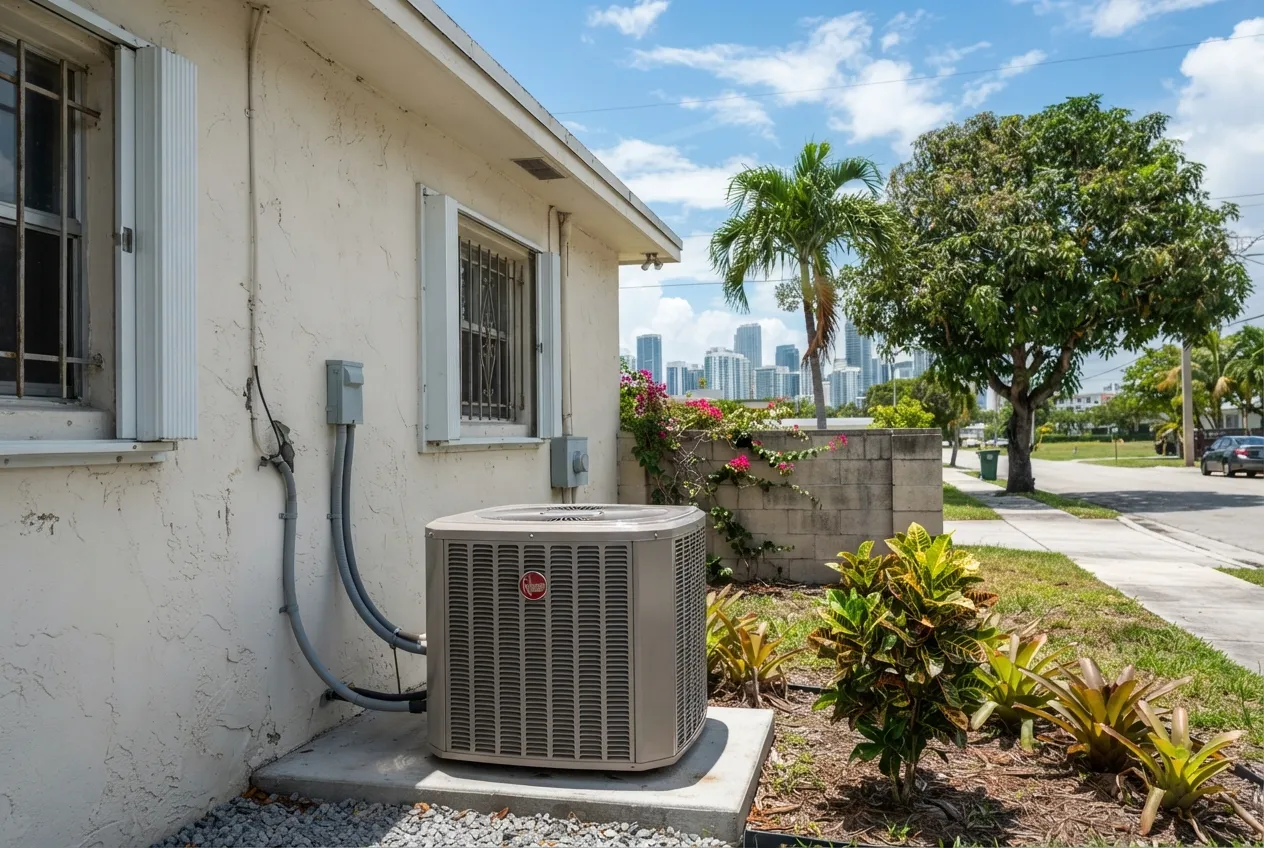
You likely need a new AC when your system can't keep up with Miami's heat and humidity, repairs are piling up, or major parts like the compressor have failed. We inspect your home, ductwork, and electrical first, then size and install a system that fits your house, with a written quote before any work begins.
A new central air conditioner is one of the bigger decisions a Miami homeowner makes, because the system will run for most of the year. Our installation process starts with your house, not with a box on a truck. We look at how your home takes on heat, how your ductwork moves air, and how your current equipment has been performing. Then we explain your options in plain terms, including whether a repair still makes sense. This page covers the signs it may be time for a new system, what we check before recommending anything, how repair and replacement compare, what drives installation cost, and what to expect from the visit.
Signs It May Be Time for a New AC
In Miami, an air conditioner rarely gets a long break. The wet season from May through October brings heavy humidity and frequent afternoon storms, and even the sunnier months from November through April usually call for cooling. That steady workload means wear tends to show up in predictable ways.
One sign on its own doesn't always mean replacement. A system that short cycles might have a thermostat or refrigerant problem that a repair can fix. That's why every recommendation we make starts with an inspection.
- Rooms stay warm or sticky even when the system runs for long stretches
- Repairs have become frequent, or the same part keeps failing
- Energy bills keep climbing while your habits stay the same
- The system uses an older refrigerant that is getting harder to service
- Corrosion on the outdoor unit's coil or cabinet from salt air and moisture
- Water leaks, musty odors, or indoor humidity the system can't control
- Grinding, banging, or a unit that turns on and off every few minutes
What We Check Before Recommending a System
A correctly sized system matters as much as the equipment itself. An oversized unit cools the air quickly but shuts off before it removes enough moisture, which leaves the house feeling clammy. An undersized unit runs nonstop and still falls behind on hot afternoons. We gather the details needed to size the system for your home instead of simply matching what was installed before.
We also ask how the house feels to you. A hot bedroom, a humid closet, or a room that never cools down are useful clues about duct or airflow problems that a new unit alone won't solve.
- Square footage, ceiling heights, and floor plan
- Insulation, window size and direction, and sun exposure
- Ductwork condition, sizing, leaks, and insulation, especially in hot attics
- Return air paths and airflow to each room
- Electrical service, disconnect, and breaker sizing
- Condensate drain line, drain pan, and where the water goes
- Outdoor unit placement, pad or stand condition, and clearance
- Thermostat compatibility with new equipment
Repair or Replace: Your Options
Not every struggling AC needs to come out. If the system is in reasonable shape and the problem is a single component, such as a capacitor, fan motor, or clogged drain, repair is often the sensible choice. We'll tell you when that's the case.
Replacement usually makes more sense when a major part like the compressor or evaporator coil fails on an older system, when repairs keep stacking up, or when the system simply can't keep your home comfortable anymore. In those cases, you typically have a few paths to consider.
Matched components matter. Pairing a new outdoor unit with an old indoor coil can hurt efficiency and reliability, so if you're weighing a partial replacement, we'll explain the tradeoffs clearly before you decide.
- Replace the full split system, both the outdoor condenser and indoor air handler, so the parts are designed to work together
- Switch to a heat pump, which cools efficiently and also handles Miami's occasional cool nights
- Choose a two-stage or variable-speed system for steadier temperatures and better humidity control
- Add a ductless mini-split for an addition, converted garage, or room the central system doesn't reach well
What Affects Installation Cost
Every home is different, so we provide a written quote after the inspection instead of guessing over the phone. These are the main factors that shape the final scope.
Rebates can also change your out-of-pocket cost. Florida Power & Light runs a Residential HVAC program that offers rebates on qualifying high-efficiency central air conditioners and heat pumps, applied through participating contractors at the time of installation. Program terms change, so we confirm the current details before including anything in a quote. Keep in mind that the federal Energy Efficient Home Improvement Credit for heat pumps only applied to systems placed in service before December 31, 2025, so it isn't available for new installations now.
- System type, size, and the efficiency level you choose
- Whether ductwork needs repair, sealing, or replacement
- Electrical upgrades needed to support the new equipment
- Access to the air handler, such as a tight closet or attic
- Changes to the outdoor unit's pad, stand, or mounting
- Local permit and inspection requirements
- Add-ons like a new thermostat, air filtration, or surge protection
How an Installation Visit Works
Here's what to expect from the first visit to the final walkthrough.
Hurricane season runs from June 1 to November 30, and storms can bring a rush of service calls and supply delays. If your system is already showing signs of trouble, planning a replacement during calmer stretches gives you more flexibility with scheduling. During the walkthrough, we'll also talk about keeping the drain line clear in the wet season and protecting the outdoor unit before a storm.
- Assessment: a technician inspects your current system, home, and ductwork and asks about comfort problems
- Options and quote: we walk through repair and replacement choices and give you a written quote listing the equipment and scope
- Scheduling and permits: we set an installation date and take care of required permits
- Installation day: we protect your floors, remove the old equipment, set the new units, connect refrigerant lines, wiring, and drainage, and test the system
- Walkthrough: we show you how to use the thermostat, where the filter goes, and what basic upkeep looks like
AC Installation by city
- AC Installation in West Miami
- AC Installation in Miami Springs
- AC Installation in South Miami
- AC Installation in Miami Beach
- AC Installation in Coral Gables
- AC Installation in North Bay Village
- AC Installation in Hialeah
- AC Installation in Doral
- AC Installation in Opa-locka
- AC Installation in Sweetwater
- AC Installation in North Miami
- AC Installation in Medley