
The short answer
Duct cleaning makes sense when you see debris blowing from vents, notice musty odors when the AC starts, find signs of pests, or have recently renovated. We inspect first, find the source of the problem, and recommend cleaning, sealing, repair, or replacement only when your ducts actually need it.
In Miami, your air conditioner runs most of the year, so the ductwork carrying that air works nearly nonstop too. Over time, ducts collect dust, pet hair, and construction debris. In our humid climate, they can also develop moisture-related growth. AirVantage Heating & Cooling cleans and inspects residential duct systems for homeowners in Miami and nearby cities. We start by looking at what's actually in your ducts and why it's there. Then we recommend cleaning, sealing, repair, or replacement based on what we find. Not every home needs duct cleaning, and we'll tell you if yours doesn't.
Signs Your Ducts May Need Cleaning
Dust on furniture isn't proof on its own that your ducts are dirty, because most household dust comes from inside the living space. But certain signs point more directly to the duct system, and they're worth having checked.
From May through October, Miami's wet season brings frequent afternoon thunderstorms and heavy humidity. Ducts that run through hot attics or have worn insulation can sweat, and that moisture binds dust into a film that's harder to remove. If you notice a smell that gets worse during these months, mention it when you schedule.
- Visible dust or debris blowing out of supply vents when the system starts
- Dark buildup around vent covers that comes back soon after you wipe it away
- A musty or sour smell when the AC turns on
- Visible mold-like growth inside vents or around the air handler
- Rodent or insect droppings or nesting material in or near the ductwork
- Recent renovation, drywall work, or floor sanding done without the vents covered
- Rooms that get noticeably less airflow than they used to
- Air filters that clog much faster than normal
What We Check During an Inspection
A good duct cleaning starts with an inspection, not a vacuum hose. We want to understand the condition of the whole system before we recommend anything.
Where it helps, we use a camera to look inside duct runs, and we can show you what we see. If the real problem is outside the ducts, such as a dirty coil or a drain line that's backing up, we'll tell you. Cleaning the ducts without fixing the source usually means the problem comes back.
- Supply and return vents, registers, and grilles
- The supply and return plenums connected to the air handler
- Flexible and rigid duct runs we can reach, including in the attic or ceiling space
- Joints, connections, and seams for gaps or separation
- Duct insulation for tears, compression, or missing sections
- Signs of condensation, water staining, or microbial growth
- The blower, evaporator coil, and drain pan, since problems there can spread into the ducts
- Filter size, fit, and type
Cleaning, Repair, or Replacement
Once we've seen the system, most homes fall into one of three paths. We'll explain which one fits your home and why.
Flexible duct with significant mold growth often can't be cleaned reliably, and replacement is the honest answer. We'll show you what we found so you can make the call.
If ductwork replacement happens alongside a new central air conditioner or heat pump, ask us about Florida Power & Light's Residential HVAC program. It offers rebates on qualifying high-efficiency equipment through participating contractors at the time of installation, and we confirm the current terms before quoting them. The federal Energy Efficient Home Improvement Credit for heat pumps is no longer available for new installations.
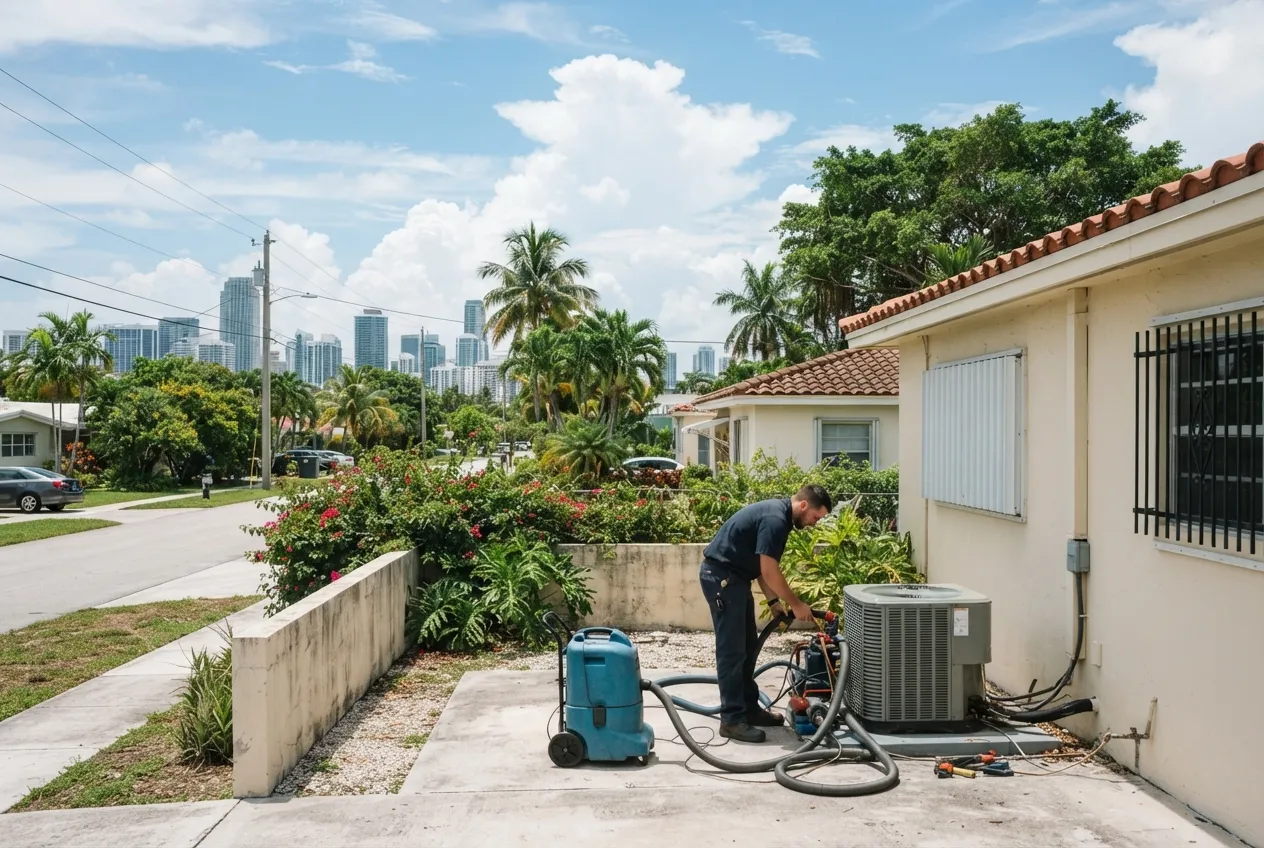
- Cleaning: The ducts are structurally sound but have buildup. We use negative pressure to pull debris into a collection unit while agitating the duct interiors, and we clean registers and grilles.
- Repair and sealing: The ducts are mostly in good shape but have disconnected joints, leaking seams, or damaged insulation. Fixing these keeps cooled air where it belongs and limits how much hot, humid attic air gets pulled in.
- Replacement: The ducts are crushed, torn, heavily contaminated, poorly sized, or losing insulation across long runs. Older flexible duct in hot attics breaks down over time, and replacing sections or the full system can make more sense than cleaning.
What Affects the Cost
We give you a written estimate after the inspection, not before, because duct work varies a lot from home to home. These are the main factors:
If you only need part of the work, such as cleaning without replacement, we'll price it that way.
- The size of the home and the number of supply and return vents
- How many HVAC systems and air handlers the home has
- Duct material, whether flexible duct, sheet metal, or duct board, since each is cleaned differently
- How easy the ducts are to reach, including tight attics, low ceilings, and soffits
- The level of contamination, including construction dust, pests, or microbial growth
- Whether coil cleaning, sanitizing, or drain line work is needed
- How much sealing, repair, or replacement is required
How a Visit Works
Here's what to expect from the time you schedule to the time we leave.
The Atlantic hurricane season runs from June 1 to November 30. If a storm caused a roof leak or let water into your attic, have your ducts checked once things dry out. Wet insulation and duct liners can hold moisture long after the storm passes.
- Scheduling: We ask about the symptoms you've noticed, the age of your system, and any recent renovation or water issues.
- Inspection: A technician looks at the vents, air handler, and accessible ductwork, then walks you through what they found.
- Recommendation: You get a clear explanation of your options and a written estimate. Nothing starts until you approve it.
- Prep: We protect floors and furniture near the work areas and cover vents as needed.
- The work: We clean, seal, or repair the system according to the plan you approved. Most cleanings finish the same day, while larger repair or replacement jobs can take longer.
- Wrap-up: We restart the system, check airflow at the vents, replace the filter if needed, and show you the results.